
Pijar Foundation and Universitas Andalas Highlight the Importance of Disability Service Systems (ULD) to Advance Inclusive Higher Education in Indonesia

Padang, 11 May 2026 – Higher education is a critical bridge for every young person to pursue a better future. However, in reality, access to university remains a major challenge for persons with disabilities due to an education system that is not yet fully inclusive. At present, the availability of Disability Service Units (Unit Layanan Disabilitas/ULD) and supporting facilities across Indonesian universities is still very limited, creating a real access gap for those who wish to learn and thrive.
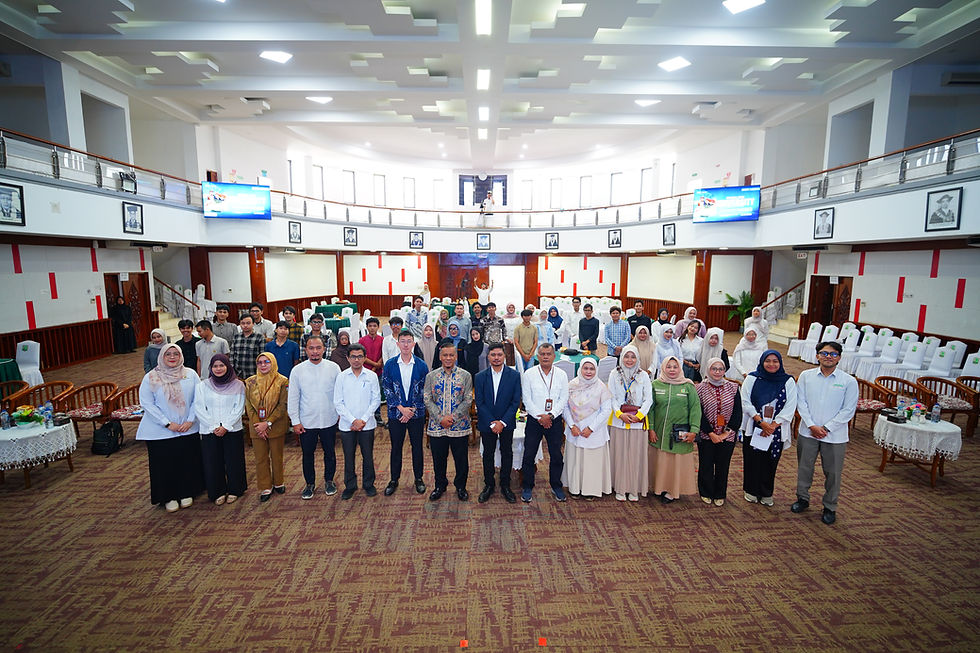
To respond to this need, Pijar Foundation and Universitas Andalas, with the support of The Nippon Foundation and the Ministry of Higher Education, Science, and Technology, convened a dialogue titled “Disability Inclusion in Higher Education: From Campus Experience to Policy Dialogue” at Universitas Andalas in Padang. The forum served as a campus-based dialogue space that brought together students, including students with disabilities, young leaders, policymakers, higher education institutions, and development partners in an open, equal, and collaborative conversation.
The Rector of Universitas Andalas, Dr. Efa Yonnedi, SE., MPPM, Akt, CA, CRGP, represented by Aidinil Zetra, S.IP, M.A., Ph.D, Secretary of Universitas Andalas, emphasized that disability inclusion is a form of justice that must be realized collectively. “Inclusion is not merely compassion, but justice that we must uphold. Universitas Andalas, through its Disability Service Unit, is ready to support all members of the campus community to access higher education equally and fairly. For that, we thank Pijar Foundation and invite all parties to collaborate in building a more inclusive campus,” said Aidinil.
Albert Oktavian, Planner and Head of the Internal Supervisory Unit (SPI) of LLDIKTI Region X, highlighted that the challenges of disability inclusion in higher education are not only about regulations, but also about the readiness of service systems at the university level. “Most universities, especially in Region X, report that they do not have students with disabilities. However, this condition must be read more critically, as it may indicate that our higher education system is not yet fully accessible. On the other hand, only a limited number of universities have Disability Service Units, accessible facilities remain scarce, and adaptive learning services are not yet optimally available. Even when a ULD exists, it is not always established as a complete system. Therefore, the main gap we face today is not only in policy, but in implementation; not only in willingness, but in system readiness,” Albert said.
To strengthen this commitment, Pijar Foundation and Universitas Andalas also signed a cooperation agreement as a foundation for collaboration to advance higher education that is more inclusive, participatory, and responsive to the needs of students with disabilities. This partnership is an initial step to strengthen knowledge exchange, develop campus-based dialogue spaces, and engage students and higher education stakeholders in formulating policy ideas that better reflect diverse learner needs.
Anthony Marwan Dermawan, Head of Public Policy at Pijar Foundation, underscored that disability inclusion in higher education must go beyond providing physical facilities and requires a shift in how institutions listen, design services, and make decisions. “An inclusive campus is not only about physical access, but about how students with disabilities can learn, participate, and fully belong to academic life in higher education. Through this forum, we reaffirm higher education as a right, and the strengthening of Disability Service Units as a critical system to realize that right,” Anthony said.
In addition to an interactive panel discussion, participants also joined a Focus Group Discussion (FGD) session to explore challenges and opportunities in advancing disability inclusion in higher education. The forum is expected to document reflections from students with disabilities, strengthen relationships between students, universities, policymakers, and development partners, and serve as an initial step toward a more tangible and sustainable inclusive higher education ecosystem.
Looking ahead, Pijar Foundation hopes that Townhall Muda University can be held across more campuses in Indonesia as a student experience-based policy dialogue platform, connecting youth voices, higher education institutions, and policymakers to discuss strategic issues on education, inclusion, future talent, and Indonesia’s 2045 development agenda.


